(The secret to lose weight is eating enough protein)
Why Most Diets Leave You Hungry
If you’re like most people, dieting conjures up thoughts of constant hunger and pain.
But it doesn’t have to be that way.
Chances are, when you’ve dieted before, your plate was filled with a sandwich or some rice or “healthy” whole grains and a bit of chicken or fish and a few vegetables to round it out.
Still, you felt hungry soon after eating. The pantry called your name. The scent of potato chips or doughnuts in the office suddenly became impossible to resist.
I know that struggle firsthand. During one of my innumerable diets years ago, a coworker used to bring leftover doughnuts and pastries from his family’s bakery. My diet had been vanquished before the apple turnovers tuned stale.
My Discovery
Then I found the solution: a protein-rich diet.
Protein helps conquer hunger and curb cravings.
Here’s the science: carbohydrates like bread, grains, fruit, or potatoes are high in ghrelin, a hormone produced in the gastrointestinal tract that increases the drive to eat. Even after eating these foods, your body still thinks it’s hungry.
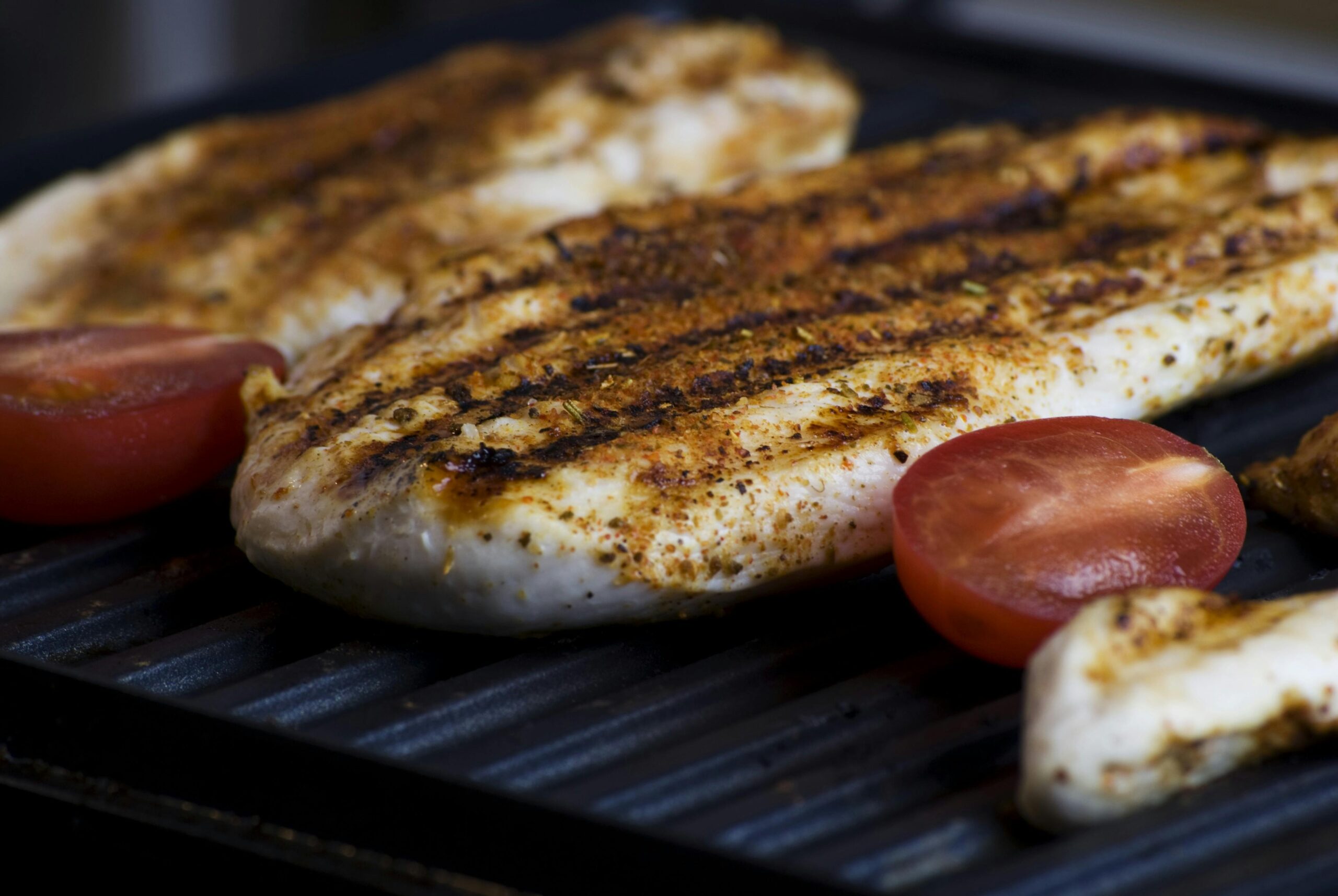
Protein-rich foods—lean meat, chicken, fish, eggs, low-fat dairy, or legumes and soy for vegans—work differently. They lower ghrelin and increase GLP-1 and CCK, two hormones that signal fullness.
These are the same pathways targeted by medications such as Ozempic and Mounjaro—but protein can achieve the same effect naturally.
(Source: Harvard Health)
How Protein Keeps You Full
A meal high in protein can keep you full and craving-free for hours, even in a calorie deficit.
That’s why increasing protein intake often leads to eating less without even trying.
Scientists call this the Protein Leverage Hypothesis.
First proposed by Professors David Raubenheimer and Stephen Simpson at the University of Sydney, it explains that humans have a built-in appetite for protein.
If your diet doesn’t provide enough, you’ll keep eating carbs and fats until your body’s protein needs are met—often overshooting your calorie target in the process.
(Study: Obesity: The Protein Leverage Hypothesis)

Real-World Proof
A large analysis from Optimising Nutrition that tracked over one million days of food data showed that people who ate higher-protein diets naturally consumed hundreds fewer calories per day.
Protein also delivers other major advantages:
- It has a thermic effect, meaning your body burns about 20% of its calories just digesting it.
- It helps preserve lean muscle mass, keeping your metabolism strong even during weight loss.
These benefits make a high-protein plan more effective and sustainable than typical low-fat or high-carb diets.
The 30-Gram Breakfast Rule
So how do we do this?
Start with your first meal of the day—whether that’s breakfast or lunch if you tend to skip breakfast.
Dr. Gabriel Lyon, in her book Forever Strong, recommends eating at least 30 grams of protein in your first meal.
That’s the amount in a 4-ounce can of tuna or about 1½ cups of Greek yogurt—roughly 200 calories, well within any calorie-restricted diet.
Front-loading protein early in the day stabilizes hunger hormones and curbs cravings for the rest of the day.
Easy High-Protein Breakfast
My go-to breakfast is simple and inexpensive. Every day I eat Oikos Triple Zero Yogurt.
Two servings provides me with 30 grams of protein and only 180 calories.
It keeps me full and satisfied until lunch at 1:30 p.m., and it puts the entire day on track. Besides, it costs just over a dollar per serving, and it comes in several yummy flavors.
It’s proof that staving off your hunger pangs doesn’t require expensive supplements or complex recipes—just a smart start to your day.
Other Advantages of Protein
There’s another reason to prioritize protein: it minimizes hunger and reduces the urge to snack.
Each meal that contains sufficient protein helps regulate appetite hormones, protect muscle, and sustain metabolic health.
When your body gets enough protein, it stops sending mixed hunger signals. You feel calm, steady, and in control—not deprived or desperate.
That’s the key to losing weight without feeling hungry.
Conclusion
Eating enough protein makes weight loss easier, steadier, and far less stressful.
It’s not about deprivation—it’s about nourishment that works with your biology, not against it.
What might change in your life if you finally discovered that hunger isn’t the price of weight loss—but the sign you’re missing what your body truly needs? Check out 3-day jumpstart program to find out